About N6JET
I'm Chris, N6JET. I grew up in the Evergreen neighborhood of San Jose, in the south part of California's Silicon Valley. When I arrived in 1969 there were still fruit orchards everywhere you looked. Over the years they have been replaced by subdivisions and other development, and I have watched the valley keep changing ever since. I have never worked in tech. I retired in 2016 after a career in the Fire Service as a Fire Prevention Officer.
I was first licensed in 1979 as a Novice, with the call sign KA6GPO, and soon upgraded to Technician. In 1983 I upgraded to General and asked the FCC for a new sequential call sign, which is how I became N6JET. I upgraded to Advanced later that same year, and to Extra in 1994. Over the years I have operated from 1.8 MHz to 24 GHz, using many different modes.
Silicon Valley is a crowded, highly active RF environment. Intermod from the many transmitters nearby makes FM analog a real challenge, and it is one reason I came to rely on internet-linked digital voice systems.
The development of the digital voice modes in Amateur Radio has contributed significantly to two of the purposes the FCC set out for our service in 47 CFR § 97.1: the "continuation and extension of the amateur's proven ability to contribute to the advancement of the radio art," and the "continuation and extension of the amateur's unique ability to enhance international goodwill."
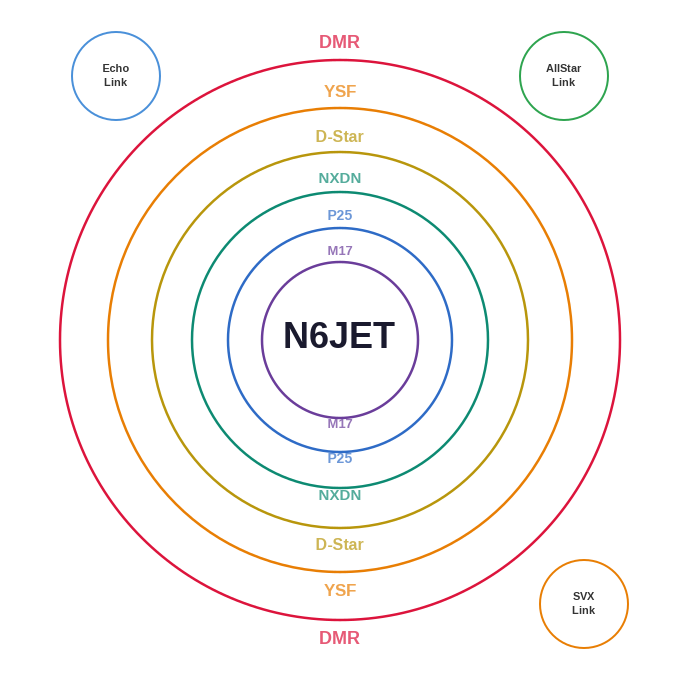
Nowadays I operate the VHF/UHF digital voice modes exclusively. I started n6jet.com as a project to learn everything I could about them, to have a place to keep my lab book notes for future reference, and to share them with the Amateur Radio community.
73, Chris, N6JET
About n6jet.com: what these notes are and how they are checked.
Contact: chris@n6jet.com